


How Asset and Inventory Management Differs Between Fire and Law Enforcement
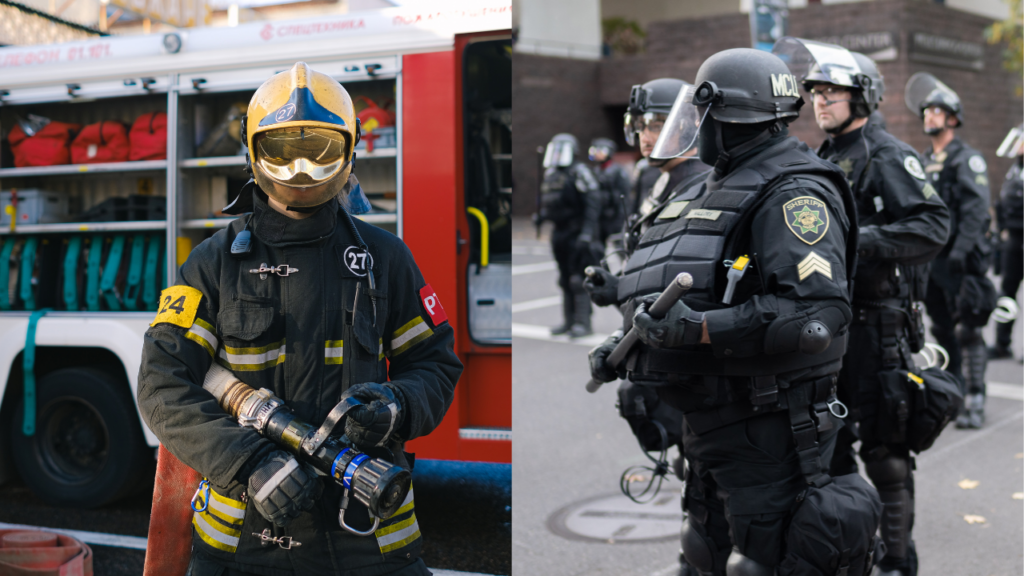
Fire departments issue and track most equipment through a hierarchy: firehouse, apparatus, and crew. Law enforcement agencies issue and track most equipment directly to individual officers, each with their own assignment, sizes, and qualifications.
Both manage high volumes of mission-critical gear, but that structural difference changes how requests flow, how costs are tracked, and how an asset and inventory management system should be configured. EMS adds a third set of requirements, built around medications, expiration dates, and restocking after every call.
Here’s how each one works, and what the right software needs to handle for fire, law enforcement, and EMS agencies.
Fire, Law Enforcement, and EMS at a Glance
| Fire | Law Enforcement | EMS | |
| Issued and tracked to | Firehouse, apparatus, and crew | Individual officers | Units, rigs, and crews |
| Primary challenge | Capturing a multi-level hierarchy | A wide range of items, users, and specifications | Expiration dates and controlled substances |
| Typical serialized items | SCBA, helmets, radios, chainsaws | Firearms, vests, tasers, bodycams, radios | Stretchers, AEDs, cardiac monitors |
| Consumables | PPE, house supplies, apparatus parts | Uniforms, ammunition | Medical supplies and medications |
| Inspection and service | NFPA service intervals | Weapons and vest inspections, rotation | Rig checks, equipment checks after each call |
| Cost tracking | By firehouse, crew, and engine | By officer, unit, and division | By rig, station, and call |
| Common standards | NFPA, ISO | CALEA, state programs | DEA, CAAS |
| Key moment | Annual and post-incident inspections | Offboarding and item recovery | Post-call restocking |
Fire Department Asset and Inventory Management
The primary challenge for fire departments is capturing the hierarchy of where each item lives and who uses it. Records need to show items, costs, and usage for every level, from the department down to a single engine and crew.
Managing by Firehouse, Apparatus, and Crew
A fire department often runs multiple firehouses, and each firehouse supports its own engines and crews. Requests come from the firehouse, items are issued to it, and costs roll up from crew to engine to firehouse to department. That visibility helps keep usage responsible and makes future budgets and supply orders easier to plan.
Gear, Equipment, and Apparatus
Firehouses request standard equipment like axes, chainsaws, turnout gear, and personal protective equipment. They also need serialized wearables like custom-fit SCBA masks and color-coded helmets, plus radios and devices configured correctly. Each engine has to be fully outfitted, with pumps, hoses, and every part tracked.
House Supplies and Living Comforts
Firehouses are also homes for the crews who staff them. That means tracking cleaning supplies and mop heads, as well as mattresses and pillows, alongside mission-critical gear.
Inspections and NFPA Service Intervals
Many firehouse items, from hoses to SCBA, require detailed inspection and preventive maintenance records. Fire logistics officers need to track SCBA, turnout gear, and PPE against NFPA service intervals and get alerts before an item reaches its service deadline. On the MCM platform, a failed inspection automatically creates the work order.
Law Enforcement Asset and Inventory Management
The primary challenge for law enforcement is the range of items, users, and specifications to account for. Instead of issuing through a firehouse, police agencies issue and track gear directly to each officer, so the system has to handle a wide range of people requesting a wide range of items, with permissions that reduce errors, excess, and loss.
Issuing by Assignment and Size
Uniforms for bike officers differ from those for mounted, motorcycle, animal control, patrol, and SWAT officers. A department may need 30 pairs of women’s size 8 patrol pants, 20 pairs of men’s 30×32, and 20 pairs of 32×32 just to cover half its patrol officers. Each officer should see only the items their assignment permits them to request.
Serialized Gear Configured to the Officer
Officers carry serialized bodycams, vests, tasers, duty belts, and firearms, and the types each officer is permitted to carry vary by role. Radios must be configured with the right ID and range for the officer’s service area. The MCM platform connects directly with Motorola Solutions, L3Harris, and EFJ/JVCKenwood radio systems, so programming and service history stay with each radio.
Qualifications Tied to Custody
Issuing a firearm is only half the record. The agency also needs to know whether the officer holding it is current on their weapons qualification. Tying certifications to issued gear flags a lapse before it becomes a liability.
Offboarding and Item Recovery
When an officer leaves the department due to relocation, termination, retirement, or a line-of-duty death, the agency needs a detailed report of every outstanding item to recover. Even one unrecovered badge can cause problems in the wrong hands.
Maintenance, Rotation, and Expiration
Like fire departments, police agencies have items that require regular inspection and preventive maintenance, and officers need to return them for rotation. Officers also need alerts when issued consumables or gear, like body armor, are nearing expiration so they can exchange them. Records that can’t be changed after submission keep that history ready for CALEA assessments.
EMS Asset and Inventory Management
EMS often runs through the fire department, but not always, and its requirements stand on their own. The primary challenge is keeping every rig stocked with in-date supplies and every controlled substance accounted for.
Vehicles and Serialized Equipment
EMS teams manage their vehicles along with stretchers, AEDs, and cardiac monitors. Each serialized item needs its own inspection and maintenance history, and each one should be tied to the rig or station it serves.
Medical Supplies, Lots, and Expiration Dates
Medical supplies and medications have to be tracked by lot and expiration date. Every perishable item in circulation needs to be found, pulled, and replaced before it expires. EMS supply managers need alerts on stock levels and upcoming expirations, not a manual shelf check.
Controlled Substances
Controlled substances require a chain of custody that holds up to DEA requirements. On the MCM platform, controlled-substance counts are documented with e-signature and secondary verification.
Post-Call Restocking
After every call, a rig needs to be restocked and checked before it goes back in service. Running restocking as a workflow, rather than a checklist on a clipboard, makes sure nothing is missed and every item used is recorded.
One Platform, Configured for Each Agency
Fire, law enforcement, and EMS have different structures, but they share a role in the same public safety network. Sometimes a city, county, or state owns and runs one system for all of them, which becomes especially valuable during multi-agency responses.
There are also real differences from one fire department to the next, and from one police department to the next. Structures and processes change over time, too.
That’s why configuration matters more than any single feature. The MCM platform is configured at both the agency and individual level, so each fire, police, or EMS agency tracks the hierarchy, items, and fields it actually uses. Role-based views give a quartermaster the supply room, a fire logistics officer their stations, and a chief agency-wide readiness. Industry-standard templates get agencies running quickly, and the platform adjusts as structures change without losing item history.
For more on choosing a system, read What Quartermaster Software Can Do and How to Find the Right One.
Frequently Asked Questions
What’s the main difference between fire and police inventory management?
Fire departments issue and track most items through a hierarchy of firehouse, apparatus, and crew. Police agencies issue and track most items directly to individual officers, based on each officer’s assignment, sizes, and qualifications.
Can fire, police, and EMS share one asset management system?
Yes. Cities, counties, and states sometimes run one system across agencies, which helps during multi-agency responses. The system needs to be configurable enough that each agency tracks its own hierarchy, items, and permissions.
How should EMS supplies be tracked differently?
EMS supplies and medications need lot and expiration tracking, alerts before items expire, and a restocking workflow after every call. Controlled substances need a documented chain of custody, such as e-signature and secondary verification.
How do fire departments track costs by firehouse or engine?
By issuing items to a specific firehouse, apparatus, or crew rather than to the department as a whole. Reports can then show usage and costs at each level for budgeting and supply planning.
What should police agencies track when an officer leaves?
Every item still issued to that officer, including badges, firearms, radios, vests, and bodycams. A single report of outstanding items shows what needs to be recovered before the officer’s last day.
Intelligent Operational Readiness for Fire, Police, and EMS
The MCM platform brings issuance, inspections, certifications, evidence, and fleet together on one connected, configurable platform, set up for the way your agency is actually structured. See how it supports quartermasters, fire departments, law enforcement, and EMS, or get a full overview of the MCM platform.
Not sure your agency is ready? Start with How to Know If You Need Quartermaster Software.
